
What is a Biologic Filter?
Also called a Bio Filter, BioFalls, Wetland Filter, Bog Filter – all filtering with the same science, just different application
Biological Filtration – A Simplified Guide
What types of filtration are there?
There are 3 forms of filtration for any pond, natural pool or body of water, biological, mechanical and chemical. We recommend using a mechanical filtration system paired with a biological filtration system.
Biological Filtration: The process by which beneficial bacteria and used to break down harmful toxins in the water such as “ammonia” and “nitrite” and transform them into usable plant food called “nitrite” for aquatic plants to consume and therefore remove from the water.
Mechanical Filtration: The process by which water to pushed through a straining basket or screen to remove physical solids from the water. This is what most people think of as “filtration”, but it is only removing debris from the water. It is important to understand that mechanical filtration alone is not sufficient enough to sustain a pond or natural pool.
Chemical Filtration: The process by which chemical additives remove harmful toxins from the water. The most common chemical filtration for pools and fountains would be Chlorine. This is not safe for fish or plants.
How it Works
Step 1
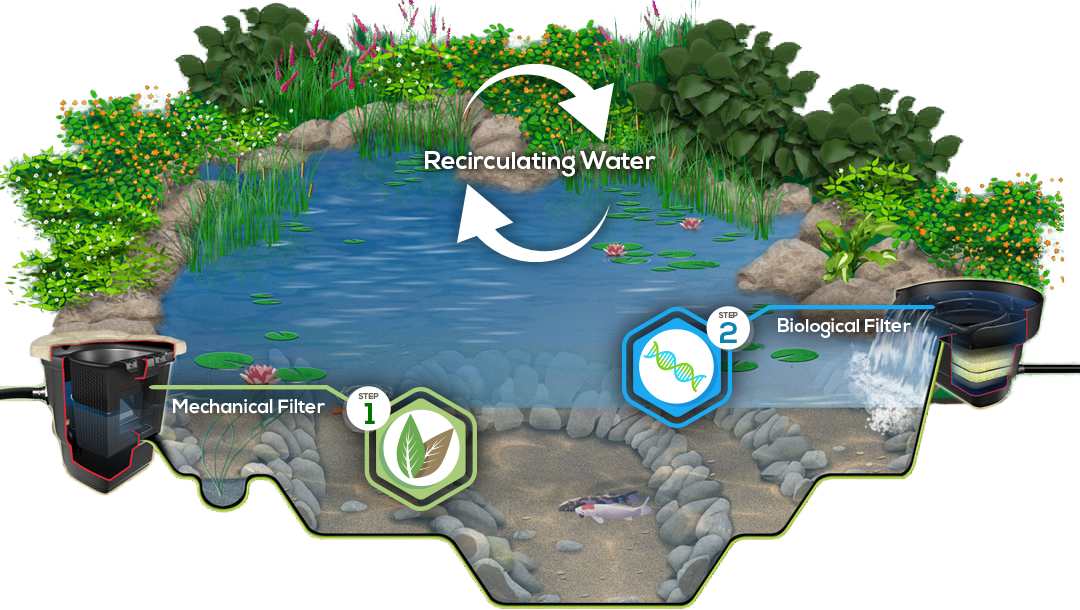
Skimmer (mechanical filter): Housing your pump and skimmer basket, this device skims debris from the water’s surface to prevent the accumulation of organic material on the pond floor, pre-filtering your pond water for the next step.
Step 2
BioFalls® (biological filter): This Is hidden within your waterfall, the water that passes through the skimmer is then pumped into the biological filter. This removes excess nutrients by braking them down with natural pond probiotics called “Beneficial Bacteria”.